Freight Trains of the Past
|
|
|---|---|
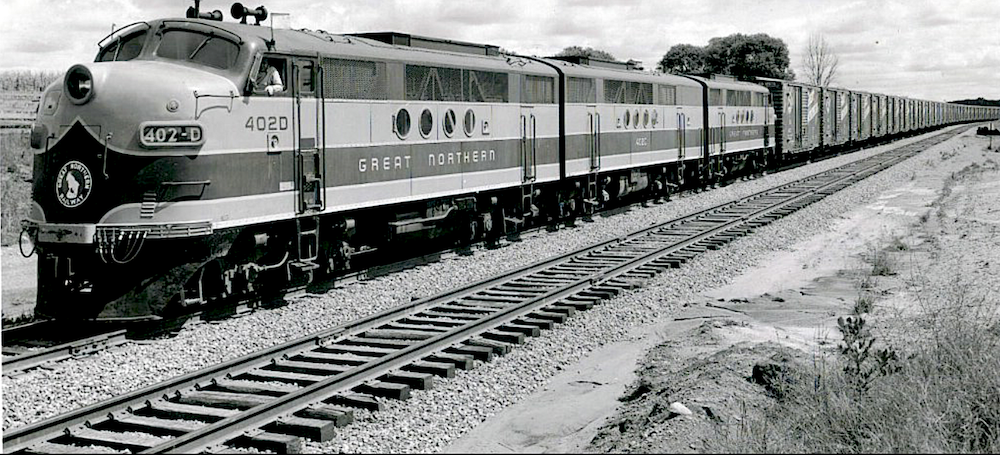
As World War II drew to a close, North American railroads had little time to reflect on their contribution to winning the fight in Europe and in the Pacific; they had been Americas' single most important industrial asset. Day and night, freight trains had hauled all-types of military weaponry, munitions, equipment and the supplies needed to fight in different parts of the world. Ninety-five percent of all freight in the United States during the war years rode on flanged wheels. Additionally, railroads faced serious challenges in the form of aging, weary steam locomoves, out-moded freight equipment, intensified truck competition, and an airline industry seeking non-traditional forms of revenue. Faced with those challenges, the Great Northern railroad (as did other railroads) lost no time in shedding military fatigues and redirecting its energy towards expanding and streamling its freight operations. GN invested heavily in new EMD-built diesel freight locomotives, rolling stock and equipment designed specifically to meet customer needs. Their customer-oriented focus led to dedicated freight service with improved train running schedules, such as the "Seattle Fast Freight" - Train #98 (above); it was one of the first (after the Cotton Belt) to adopt a less-than-carload (LCL) strategy. (Matt Petersen collection) |
|
Union Pacific's - "Daily Livestock Special" Train #299
The DLS assignment lasted approximately two and one-half years before giving way to comparable
Electro-Motive Division-built freight cabs. The demotion became necessary when the re-numbered
1600 series FA/FB units developed various mechanical ailments, such as crankshaft failures and
blown turbo-chargers. The Alcos were transferred to the railroad's eastern division which had
a much gentler profile and was closer to the main shops. (Uniom Pacific publicity photo / R.
Craig collection) |
|
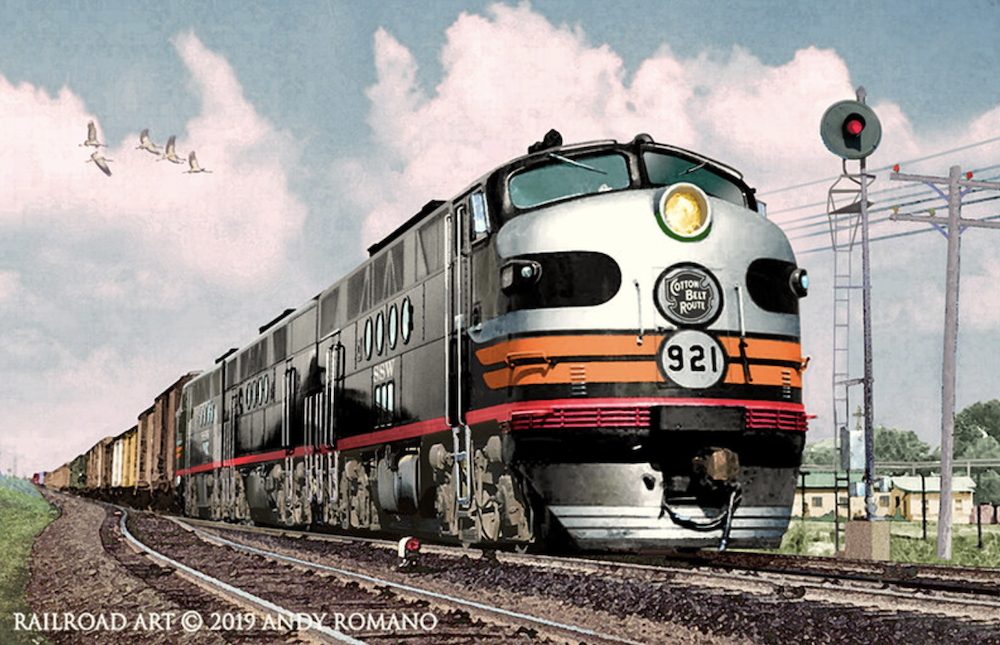
St. Louis-Southwestern's - "Memphis Blue Streak Merchandizer"
Marketed from the get-go in the late 1930s as a less-than-carload service, the Cotton Belt
train met with substantial success which let to the route being extended in 1946, jointly with
parent Southern Pacific, all the way to Los Angles. To keep pace with a growing customer base
in the 1960s, a second and third section of the train were added. It was about this time
that intermodal business was becoming a major component of the railroad's traffic base.
(Andy Romano photo-art) |
|
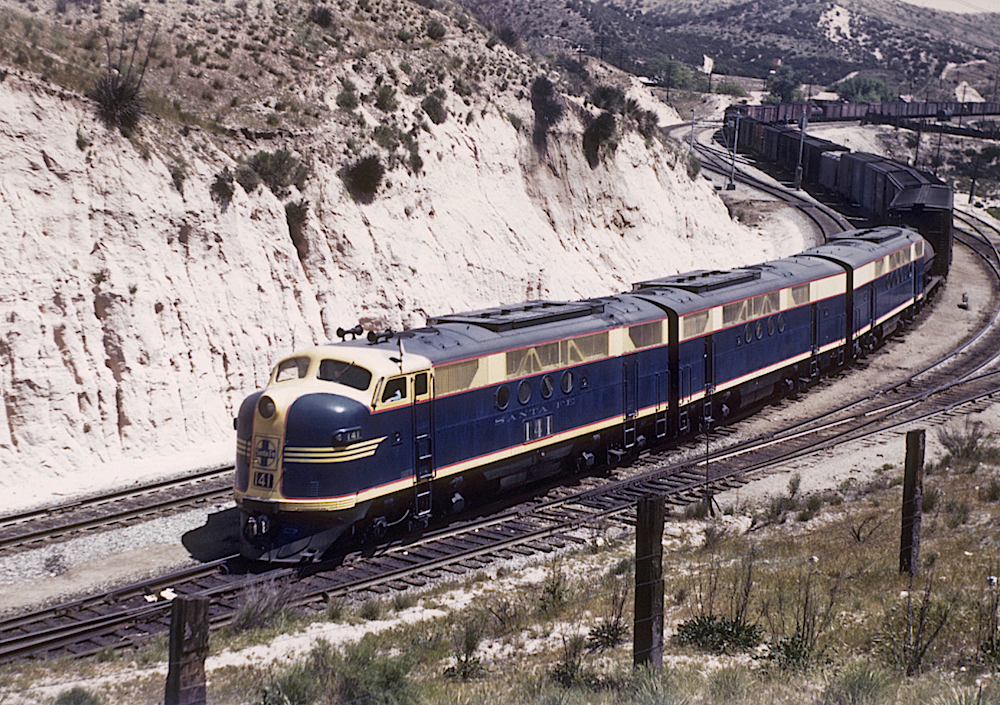
Atchison Topeka & Santa Fe's - "SWG"
One of the hottest assignments on the ATSF was the "SWG" which carried all types of tonnage between
southern California and Seattle in the Pacific Northwest. The letters SWG stood for Santa Fe,
Western Pacific and Great Northern. During the early 1940s, the SWG was powered by solid blocks
of FTs. (Ralph Lettilier photo / Alan Miller collection)
|
|
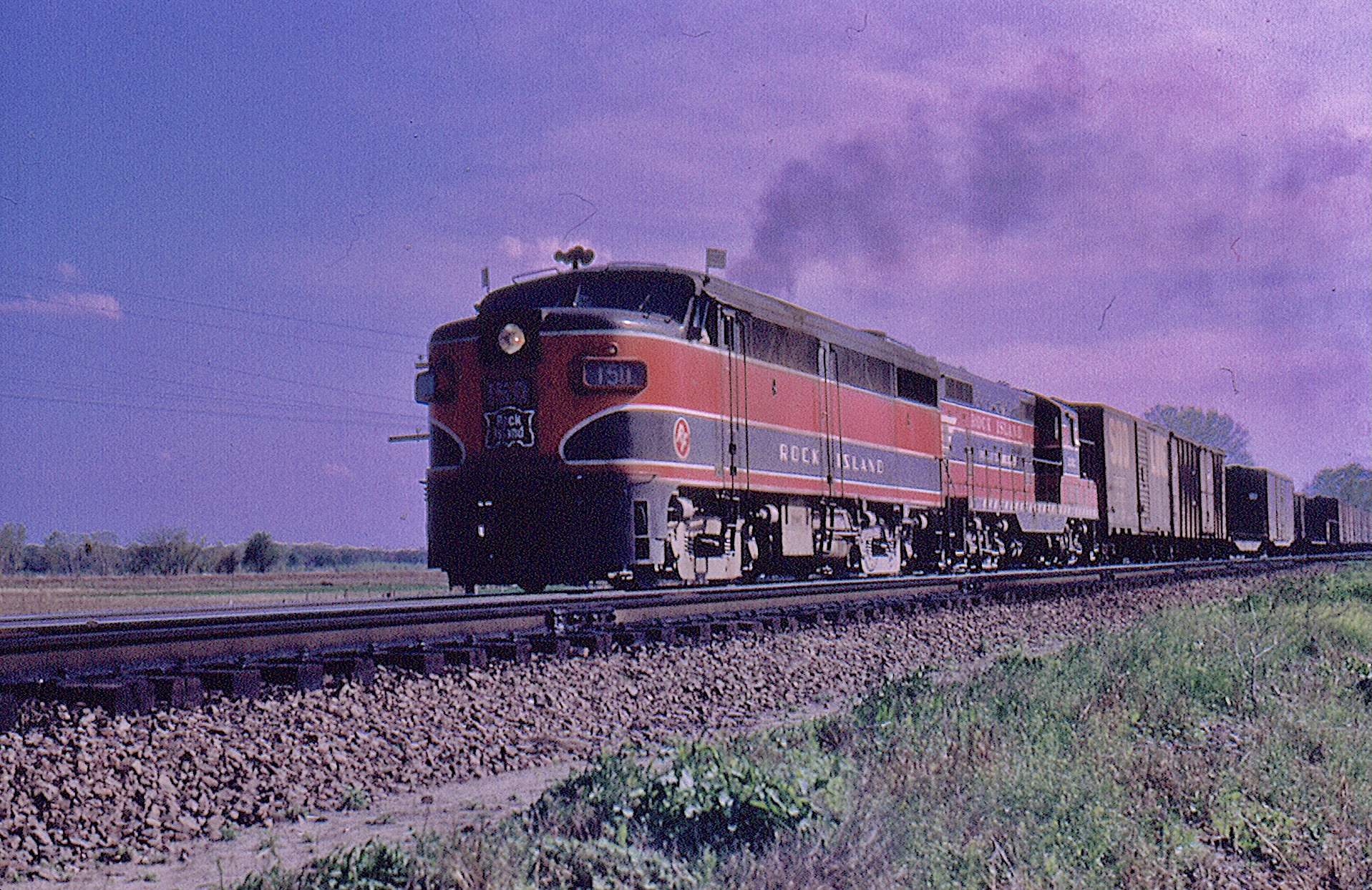
Rock Island's - Denver Rocket Freight
Attired in a distinctive looking red and black livery, the new EMD and Alco units units were
initially assigned to "Rocket Freight" service between the Twin Cities and Texas, as well as,
Chicago and western points. With a growing stable of diesels, the 7600-mile Rock began to witness
significant increases in freight tonnage, schedule improvements, and greater locomotive
flexibility. Just the kind of medicine the railroad needed to get temporarily healthier. (Clayton
Tinkham photo / J. David Ingles collection)
|
|
Missouir Kansas Texas -- Freight Power Strategy
The company's "sample everything on the menu" approach to motive power, netted an unusual
assortment of diesel models from most of the major locomotive builders of the period, with
the exception of Lima. They ranged from small 12-ton Whitcomb switchers to sleek long nose,
158-ton Alco-GE PAs. Although their smorgasbord approach gave track-side train watchers many
hours of enjoyment, it cost the Katy big-time in later years in terms of excessive locomotive
maintenance and major engine replacements. (MKT publicity photo)
|
|
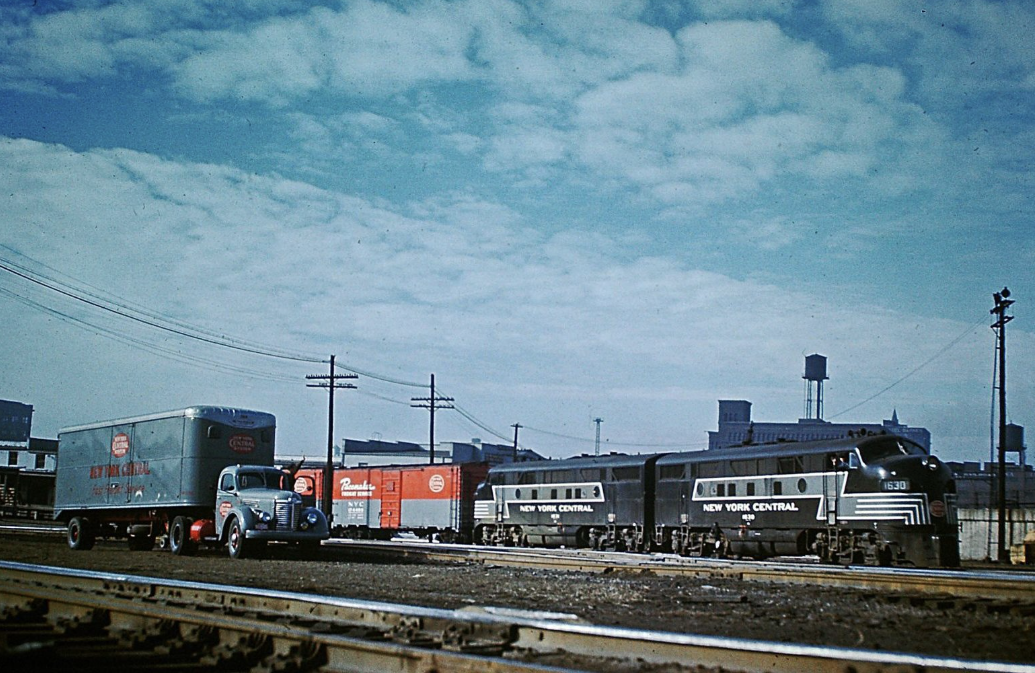
New York Central's - PaceMaker Trains #BN-1/BN-2
The resulting uptick in traffic led NYC to extend the overnight service during 1948 & 49 between
major transportation corridors, such as Boston-New York, Detroit-Chicago, Cleveland-Indianapolis
and Cincinatti-East St. Louis. Ten years later, the railroad introduced a new TOFC "Flexivan"
service and the "Pacemaker" faded into history. (Photographer unknown ** / internet) |
|
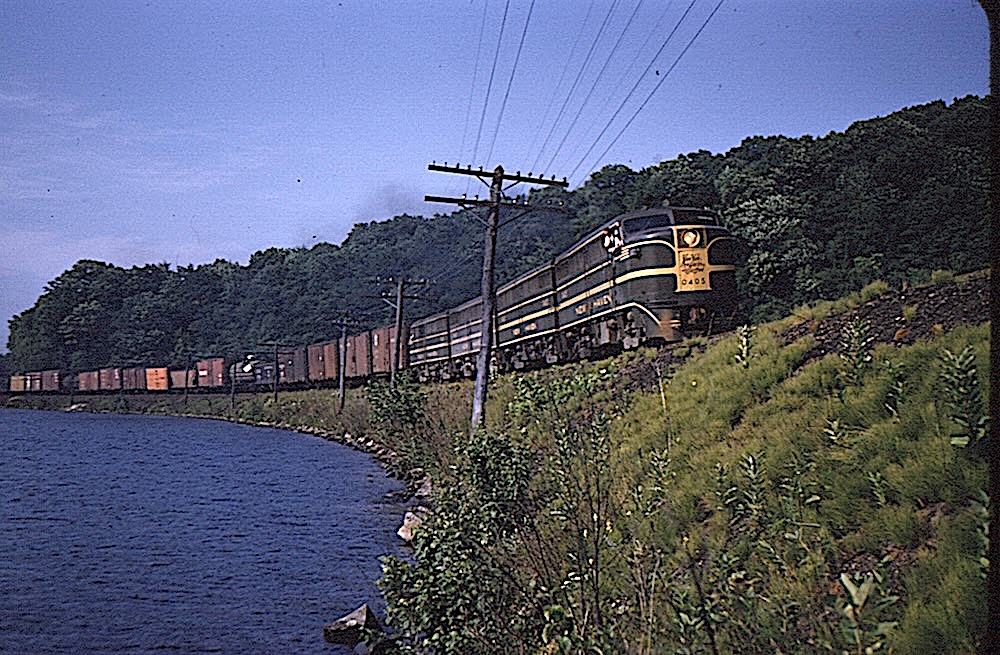
New Haven's - Maybrook to Cedar Hill Line
Additionally, the new diesels permitted NH management to run longer trains on faster schedules
and at the same time eliminate the prior requirement for cost-intensive steam helpers on the
line. These changes had a direct and positive impact on the railroad's financial position.
(Thomas J. McNamara photograph). |
|
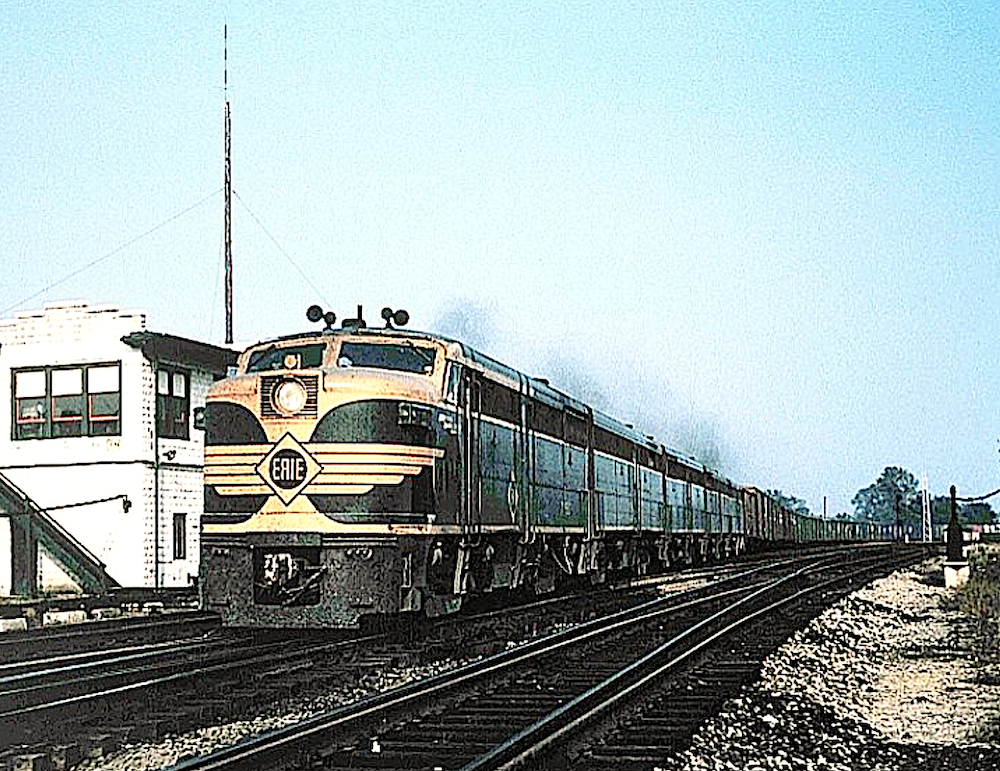
Erie Railroad's - "Flyng Saucer" Trains #98 & 100
From the railroad's 51st Street yard in Chicago to the shores of the Hudson River in New
York, Erie's FAs drew all kinds of assignments; they could be found on high priority hot-shots,
as well in general secondary service. The hottest of the hot were the eastbound "Flying Saucers"
(NE-98 and NE-100), and Alco A-B-B-A sets were common sights on these LCL (Less-than Car Load)
trains that carried a promise of second-day delivery in New Jersey. More than fifty percent
of the revenue generated by the time-sensitive flyers, as well as their westbound counterparts,
came from manufactured goods. (J. David Ingles photo)
|
|
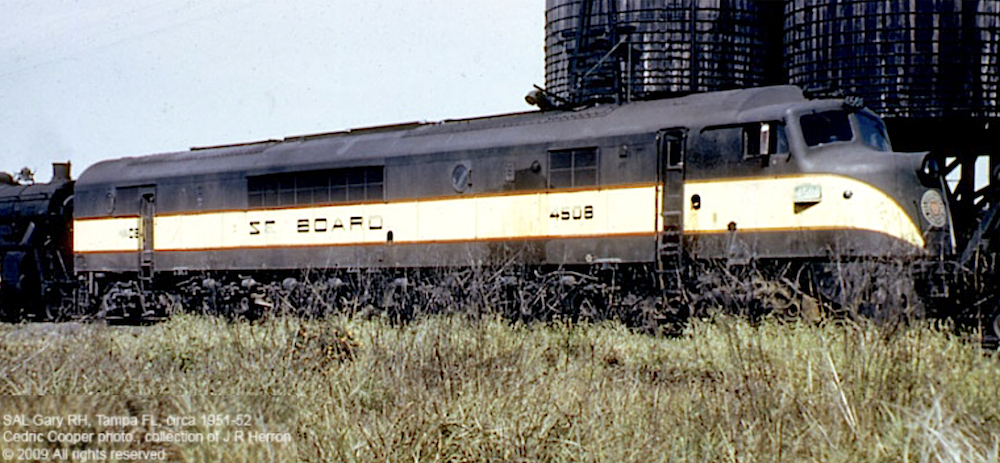
Seaboard Air Line's - Freight Centipedes
On a map, the railroad appeared relatively straight between Richmond, VA and its southern
terminus in Miami; however it had to "bobb and weave" its way through the hills of the
Carolinas and Virginia. The 12-axle road units none-the-less proved quite capable of handling the
railroad's roller-coaster profile. After twelve years of dependable service on the SAL, the
91'-6" long giants were retired during the latter part of 1957. (photo by Cedric Cooper /
J.R. Herron collection)
|
|
Acknowledgements:
** Note: If you know the photographer's name, please let me know; I would like to assign proper credit. |